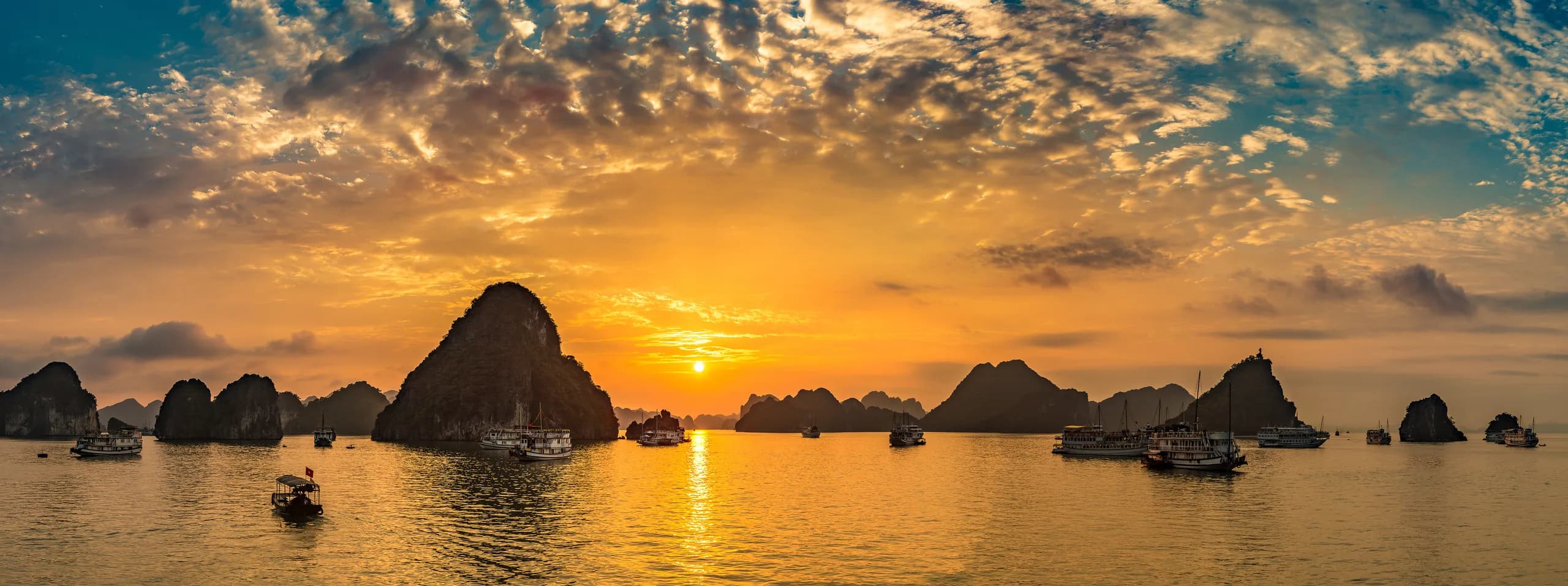


Hạ Long, Quảng Ninh
A Night on Hạ Long Bay — What an Overnight Cruise Is Actually Like
UNESCO limestone karsts rise from emerald water. An overnight cruise shows you the rhythm of the bay beyond the daytime crowds.
By Trip2VN Editorial · 8 min read · Published Jul 11, 2026
The Limestone Seascape
Most people see Hạ Long Bay for a few hours. They board a tour boat in Hạ Long City mid-morning, cruise through channels lined with limestone towers, stop at a cave or two, eat lunch on deck, and motor back by sunset. It's efficient. It's also not really Hạ Long.
An overnight cruise is different. You arrive just as the vendors and daytrippers thin out. You stay on the water through evening and wake on the bay itself, at anchor in the quiet. That rhythm matters.
Hạ Long Bay is not a beach destination. It's well over a thousand islands and islets rising from the water—most of them low and steep, a few climbing several hundred metres. They are limestone karst formations, the leftover skeleton of an ancient tropical sea. Where tropical seabeds once layered with sediment over hundreds of millions of years, tectonic movement eventually lifted and eroded that stone into vertical cliffs, peaks, and the tower-like formations you see today. UNESCO first inscribed the bay as a World Heritage site in 1994.
The bay sprawls across Quảng Ninh Province in the northeast, south of the Chinese border. When you float in the middle of it at dusk, the islands aren't scenic backdrop—they're the reason you came. Your cruise ship becomes irrelevant. What matters is the water between you and those stone cliffs, the way light changes on the limestone as sun drops, the small fishing boats that pass at night with lights strung across their decks.
Boarding and First Hours
Your boat usually arrives at the port late afternoon. The main tourism cluster—Hạ Long City and its piers—feels industrial: restaurants with menus in ten languages, tour operators shouting, vendors selling t-shirts and bottled water. Overnight cruises typically depart early evening once the day boats have cleared out.
You board, find your cabin (small, functional—the view matters more than the room), and meet whoever else chose an overnight. The boat motors slowly through the central limestone channels, engines loud, the deck crowded at first. Then, two or three hours in, most people drift inside. The decks get quiet. The sky softens.
Dinner happens onboard. It's usually fresh fish, shrimp, squid—whatever the crew caught or bought that morning. Rice, vegetables, fried spring rolls. The food is honest, not fancy. You eat with the other passengers or alone, depending on the boat's policy. Some cruises offer group seating; others let you fend for yourself. After dinner, many boats stop for the night, anchoring in a sheltered channel among the karsts.
Evening and Night
This is what separates an overnight cruise from a day trip: the quiet. Once anchored, the engine cuts. The water around your boat is nearly still. Fishing lights appear on the horizon—other boats working the bay through the night. Some cruises dim the ship's lights so the stars show. Most don't, but they try not to blast the deck with flood lights either.
You can kayak at dawn or late morning before departure, paddling into side channels and limestone caves. The major routes see a lot of kayakers, so crowds are real. Quieter options exist (see below) but are harder to find and cost more. Some boats offer bamboo-raft visits to lagoons enclosed by limestone walls instead—a slower, more claustrophobic version of kayaking. Both work; it depends on what feels right.
Many cruises stop at a cave during the day—often Sửng Sốt (Surprise Cave), which is large and well-lit and worth seeing once but crowded. Some itineraries include a floating fishing village. Be clear about what you're seeing: most families were resettled onshore years ago, and the villages that remain are maintained partly as cultural heritage sites, though working boats still fish the bay every night. Guides may present them as glimpses of traditional life. Look respectfully. Don't treat people as exhibits.
Quieter Bays and Alternatives
The Hạ Long Bay proper—the central UNESCO zone—sees thousands of tourists daily. If you want fewer crowds, consider Bái Tử Long Bay, a less-trafficked karst zone to the east, still within Quảng Ninh but managed separately. Fewer boats run there; more of the kayaking and island-hopping feels solitary. The same geology, half the human density.
Lan Hạ Bay, to the south around Cát Bà Island, has the same limestone formations and quieter routes. Tour boats usually position themselves around the main channels; if you stay on a smaller cruise or a private boat, you can find pockets of relative silence.
The trade-off: less-crowded bays often mean less infrastructure. Facilities are basic. The boats that service them are older or smaller. Your cruise might feel less polished. But you also won't queue for photos at the top of a famous cave while fifty other people wait their turn.
Seasonal Notes
Mist and weather: November through March, the northeast monsoon brings cool, dry weather and occasional mist. Early mornings, the bay can vanish into fog—limestone islands emerge ghostlike. It's beautiful if you like moody seascapes; frustrating if you want clear water and sky.
April through September is warmer, more humid, sometimes rainy. Typhoon season technically runs July through September, though direct hits on the bay are rare. The water is calmer in summer but crowds peak in July and August.
October and November are probably ideal: cool enough to be comfortable, clear enough to see the limestone properly, tourist numbers lower than summer but manageable.
The Morning After
You wake up on the water. That's the whole point. The engine starts early, and you cruise slowly back toward port, often with a stop for breakfast on deck or kayaking before final departure. The bay is quietest at dawn. Most travelers sleep through it or stay inside. If you can bear to get up, be on deck then.
By late morning or early afternoon, you're back at port. The mainland reappears. The noise returns.
The Honest Version
Overnight cruises on Hạ Long Bay are a commercial product, and it shows. Many boats are aging. Some crews are knowledgeable and warm; others are tired and rushed. The romance of a night floating among limestone cliffs is real, but it's framed by commercial tourism infrastructure: scheduled sunrise kayaking, scheduled meal times, scheduled departure.
Still, it's the closest most travelers get to experiencing Hạ Long as something more than a box to check. The bay itself—the geology, the water, the weight of those stone towers—makes it worth doing.
If you're drawn to Hạ Long's limestone landscape and want to plan an overnight that fits your style—quieter bays versus central routes, activities versus unstructured floating time—tell Trip2VN what you're after, and a specialist can build an itinerary matched to what you actually want to see and experience.
The next step
Bring this into your trip
Tell us what caught you here — a specialist builds the days around it and replies with a clear price.
Plan this trip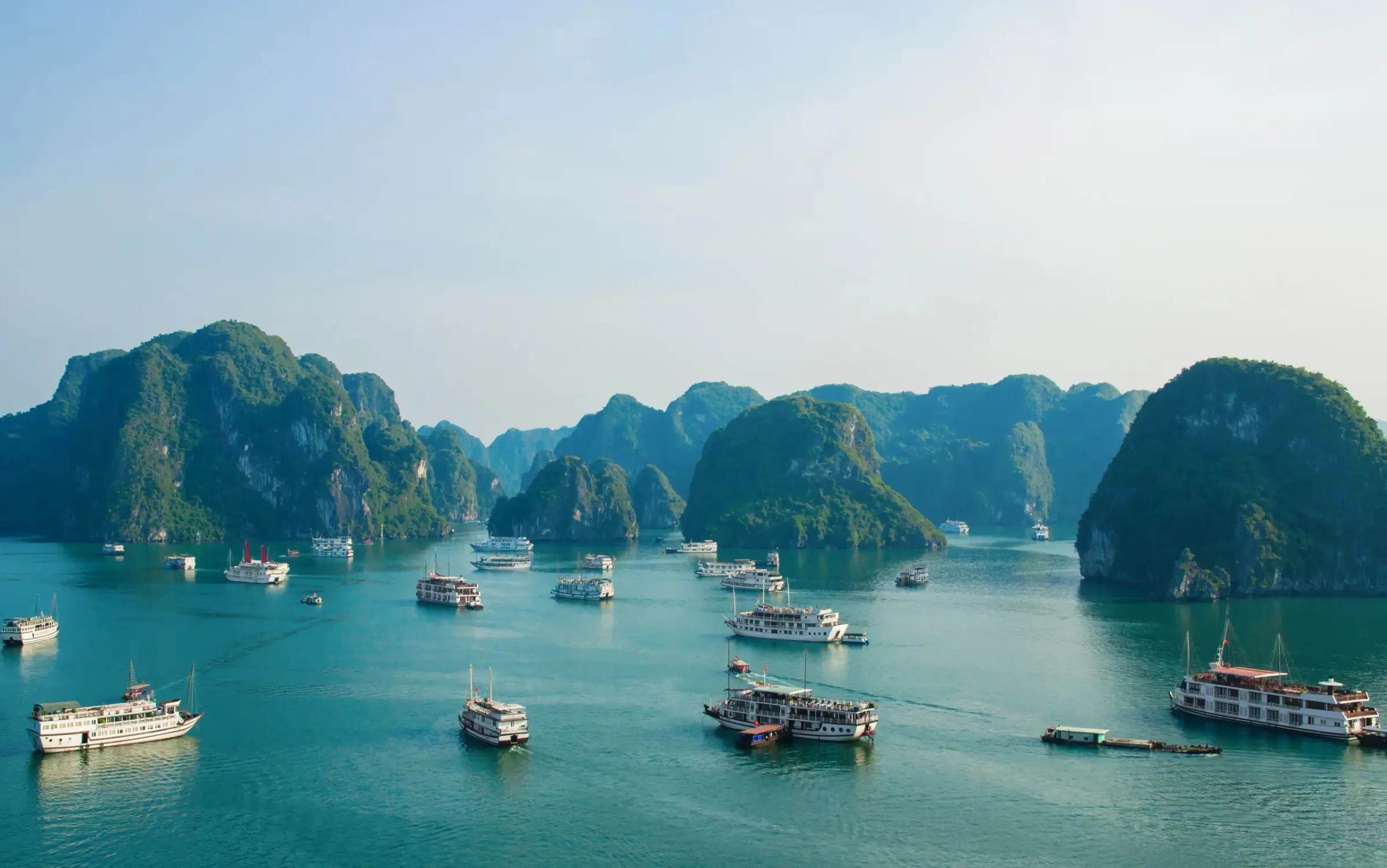 A trip that goes thereHạ Long Bay Cruise2 days · From ~$270