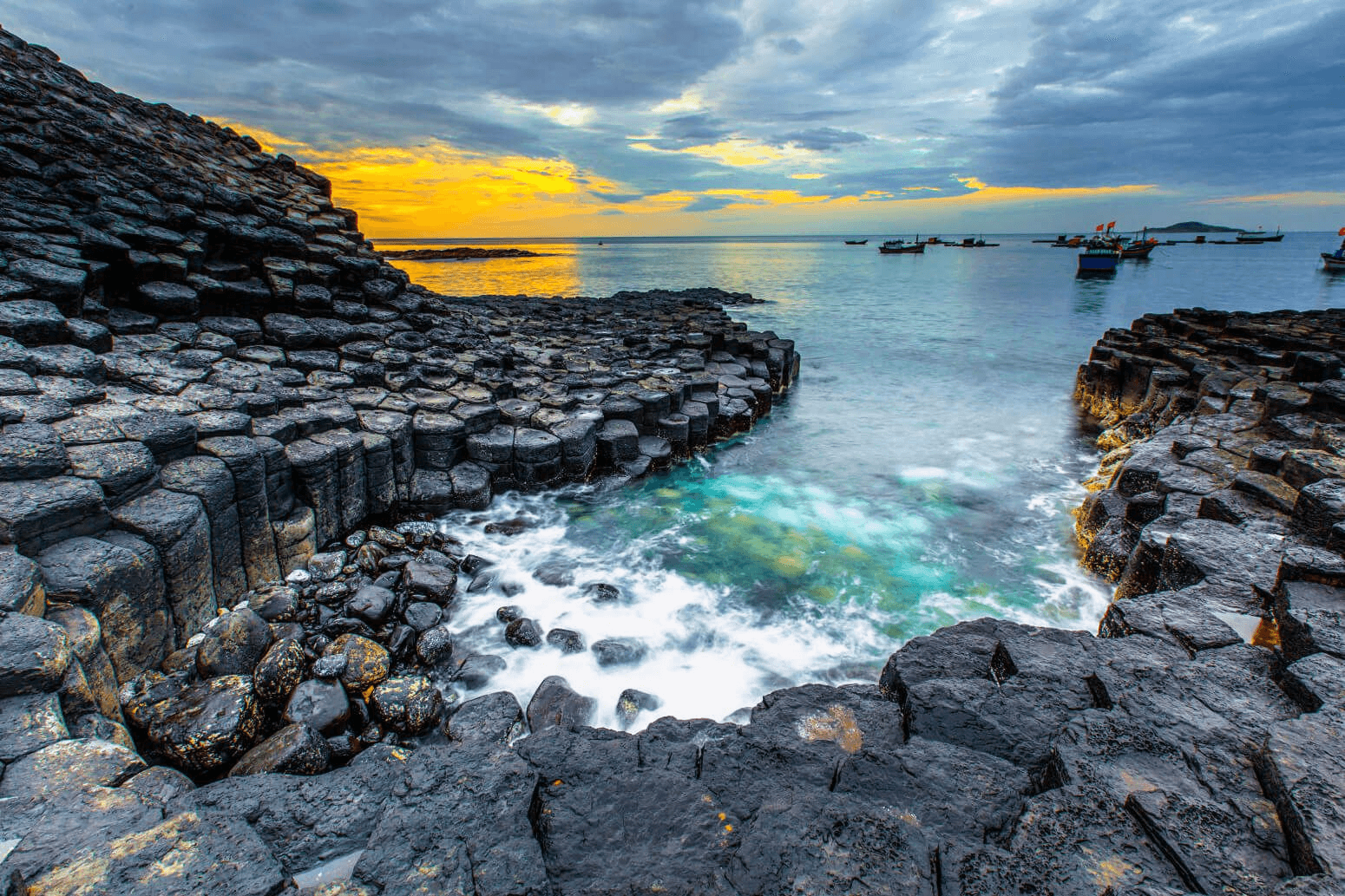

Off the trail · Mũi Né, Bình Thuận coast
The Mũi Né dunes: a desert by the sea
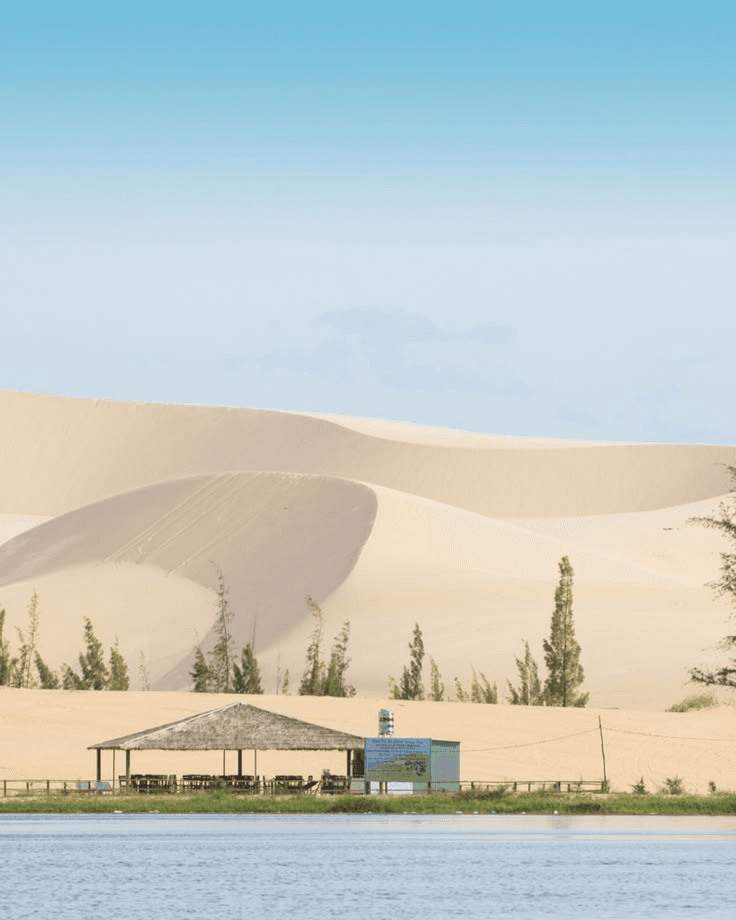
Twenty minutes from a fishing town lined with coconut palms, the ground turns to Sahara. Mũi Né keeps two dune fields — the Red Dunes rising right over town, and the vast White Dunes half an hour further up the coast, complete with a lotus lake at their feet. It is the most improbable landscape in southern Việt Nam, and at dawn, one of the most beautiful.
How it came to be
The dunes are the work of wind and a dry microclimate found nowhere else this far south: Mũi Né sits in a rain shadow that keeps it parched while provinces around it flood. Centuries of monsoon wind lifted coastal sand inland and sorted it by weight and mineral — iron oxides paint the near dunes red-orange, while the quartz-white field at Bàu Trắng shifts shape with every season. The 'water fairy stream', Suối Tiên, cuts a miniature painted canyon through the same red sediment on its way to the sea.
Getting there
Mũi Né hangs off Phan Thiết, an easy coastal hop from Sài Gòn by sleeper bus or the morning train. The Red Dunes are ten minutes from the resort strip — walkable at a stretch, a short taxi otherwise. The White Dunes at Bàu Trắng are about 25km northeast along a spectacular coast road; go by rented motorbike or the sunrise jeep tours every guesthouse arranges. Agree jeep and quad-bike prices clearly before setting off — it is the one place in town where haggling is part of the ride.
Being there
At the Red Dunes, local kids rent plastic sleds and coach your technique down the steepest faces — pay the small fee, take the ride, lose gracefully. The White Dunes are a different register: a genuinely vast sand sea where ten minutes' walk from the jeep track buys you a horizon with nobody in it. Climb a ridge, sit, and watch the wind redraw the crest line in real time. Finish at Suối Tiên, wading the ankle-deep stream barefoot between red canyon walls.
When the light is right
Sunrise at the White Dunes is the trip's centrepiece — jeeps leave the strip around 4:30–5am, and by 8 the sand is hot and the light flat. November to April is the dry, reliable season; late afternoons at the Red Dunes give the softest colour. If the wind is up, embrace it: this stretch of coast is one of Asia's kite-surfing capitals for a reason.