
Phú Quốc, An Giang
The Fishing Piers, Still Standing
On Phú Quốc, the old fishing neighbourhoods have outlasted the tourism boom — the wooden boats, the nets, the before-dawn ritual of a working island.
By Trip2VN Editorial · 9 min read · Published Jul 13, 2026
The Boats and the Early Morning
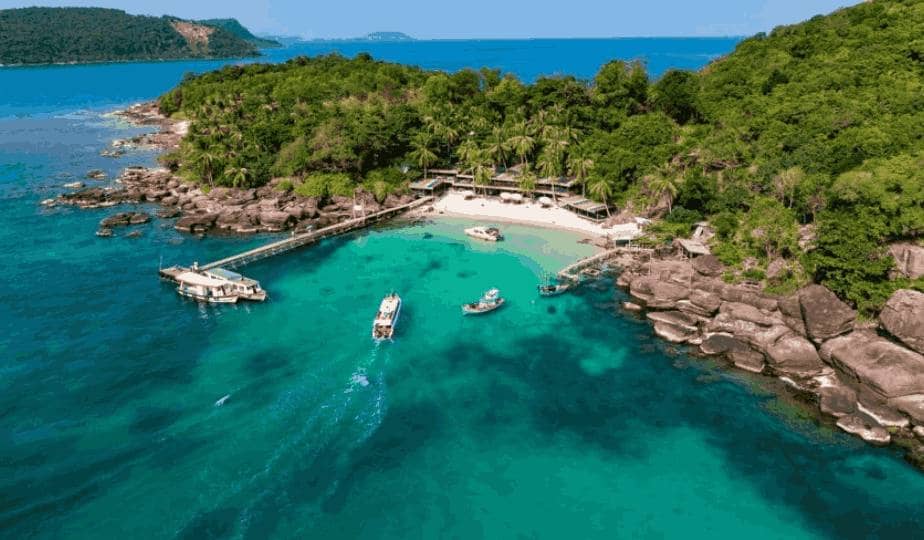
Phú Quốc was not always a destination. Within living memory it was a fishing island — a remote place where families had worked the sea for generations, building wooden boats and making fish sauce. The development that followed — the resorts, the beach clubs, the airport that turned the island into an easy hop from Sài Gòn and Bangkok — arrived fast and changed almost everything. Restaurants with international names line the busiest beaches. Luxury hotels sit above the coves. The island has been remade.
And yet, in the older fishing communities that predate the boom — along the working waterfront and around the old docks — something has held. The boats are still wooden, still painted in blues and greens. The nets are still hauled and mended by hand. The fleet still slips out before dawn. None of it is a performance for visitors. It is simply how the island works, underneath and alongside the resorts and the night markets.
To understand Phú Quốc you have to hold both facts at once: it is now a major destination, and it is still, in its bones, a fishing island.
A working day here begins in the dark. The boats — modest wooden craft, high at the prow, painted in fading colours — leave their moorings before first light. The crews work in small, practised teams: one at the wheel, one at the nets, one coaxing an elderly diesel engine to life. Everything is efficient and entirely unhurried.
Most of the fleet fishes small-scale — squid, mackerel, anchovies, shrimp — often through the night, returning as the day comes up. The catch is sorted, iced, and moved on to the market or the processing sheds. This rhythm has held for decades.
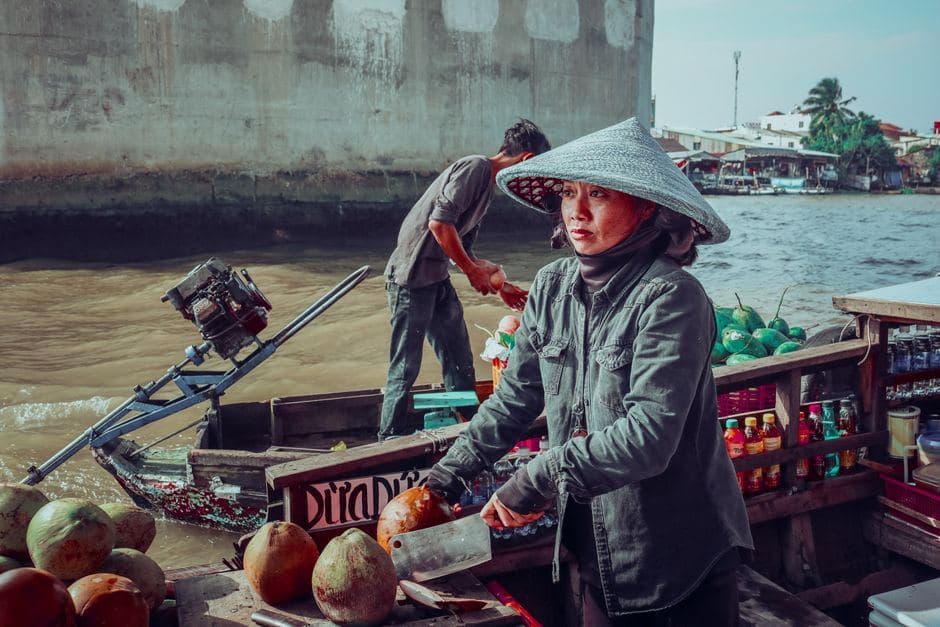
What strikes first-time visitors is the boats themselves. They are beautifully proportioned, the wood worn smooth by salt and sun, the paint faded and scratched — no one is trying to make them look new. They are working boats and they wear their use openly. Some carry painted names on the bow; others are simply numbered.
The piers where they land are not tourist facilities. They are covered in the debris of the trade: nets drying in the sun, fish scales from the morning's catch, wooden crates stacked for the next load of ice. The air smells of salt, fish and diesel. Arrive before dawn and you will likely be the only visitor there — and your presence will not change the pace of the work by a single beat.
Fish Sauce Country
Phú Quốc is famous, in Vietnam and far beyond it, for one product above all: nước mắm — fish sauce. The island's version carries protected geographical status, and the method is strict: anchovies from the surrounding waters, salted at sea within hours of the catch, then fermented in enormous wooden vats for a year or more. The liquid that emerges is the deep umami foundation of Vietnamese cooking — what Parmesan is to an Italian kitchen, or good soy to a Japanese one.
Walking through the fishing neighbourhoods, you will smell it before you understand what it is: pungent, salty, faintly sweet — an aroma some visitors flinch at and others come to love. It is the smell of the island's economic heart.
Family fish-sauce houses still operate in the traditional style, and some welcome visitors who arrange it ahead through a hotel or a guide. Standing in a barrel house among wooden vats taller than a person, each quietly working through its long fermentation, is unexpectedly moving. The vats represent years of labour; the product, generations of knowledge about how a small silver fish becomes one of the world's great condiments.
Seasons
The wet season — roughly July to October — is when the island feels most like itself: fewer visitors, rougher seas, the working rhythm closest to the surface. The dry season, November to May, brings the calm water and the crowds; the beaches fill and prices climb. You can still find the fishing island in high season, but you have to be intentional about it — and willing to wake early.
How to Experience It
The old fishing neighbourhoods sit along the island's coastline, on both the east and west sides, and are easy to reach by taxi or a rented motorbike.
To see the fleet in action, be at the docks before dawn. Wear shoes you don't mind getting wet — the piers are slick. Bring a camera if you like, but keep out of the way. The fishermen are working, not performing; your role is to watch quietly as a working island moves before the tourists wake.
A visit to a traditional fish-sauce house needs arranging a day ahead, through your hotel or a guide. You will walk the rows of wooden fermentation vats and hear how the process works; some houses finish with a tasting.
The main morning market is worth an hour even if you buy nothing. The energy is real — this is where the island actually shops. Go after the boats have come in, before the day heats up.
For eating, look for the small places near the old docks — often unnamed, often Vietnamese-only signage. Order whatever came off the boats that morning: a fish soup, a whole grilled fish. The quality will be excellent and the bill will be a fraction of a beachfront resort's.
What Remains
Phú Quốc is changing; there is no denying it. Old timber houses give way to concrete. Young people leave the fishing villages for hotel work. Production mechanises. The open question is how much of the island's older life will be carried forward, and how much will be absorbed into the tourism economy.
For now, the boats still leave before dawn. The nets are still hauled by hand. The fish sauce still ferments slowly in wooden vats. It is worth going to see — not as a spectacle, but as real work, done well, by people who have done it for generations.
The piers are still standing. The work continues.
If you'd like a Phú Quốc that includes the working island as well as the beaches, tell us — a specialist will shape the days around it and come back with a clear quote.
The next step
Bring this into your trip
Tell us what caught you here — a specialist builds the days around it and replies with a clear price.
Plan this trip A trip that goes therePhú Quốc Island Adventure: Safari, Theme Parks & Island Hopping6 days · From $820