

The Highlands
Vietnamese Coffee, Explained — from the Phin to the Street
How a country came to dominate global robusta production, and how strangers learned to drink it with condensed milk, egg, and salt.
By Trip2VN Editorial · 8 min read · Published Jul 4, 2026
Why Vietnam, Why Robusta
Vietnam produces more robusta coffee than any other country in the world. Robusta is darker, heavier, more bitter than arabica—the premium bean. It is the coffee that goes into instant coffee packets, commercial blends, and espresso crema. For decades, the world did not think of robusta as something worth writing about. Vietnam did not care. It grew robusta, exported it, and became indispensable.
The Central Highlands, around the city of Buôn Ma Thuột in Đắk Lắk province, is the heart of this industry. The soil there is basalt, dark and rich. It suits robusta the way limestone suits certain wines. The climate—wet and warm—is exactly what the plant demands. What began as an experiment by French colonists in the 1930s became, by the late 20th century, the backbone of Vietnam's agricultural economy.
Today Vietnam grows a large share of the world's robusta. Brazil is the only country that produces more coffee overall, but Vietnam leads in this one variety. The scale is vast—hillside after hillside of waist-high plants in Đắk Lắk, leaves heavy with cherries, tended by workers with baskets.
The Phin: One Tool, Centuries of Ritual
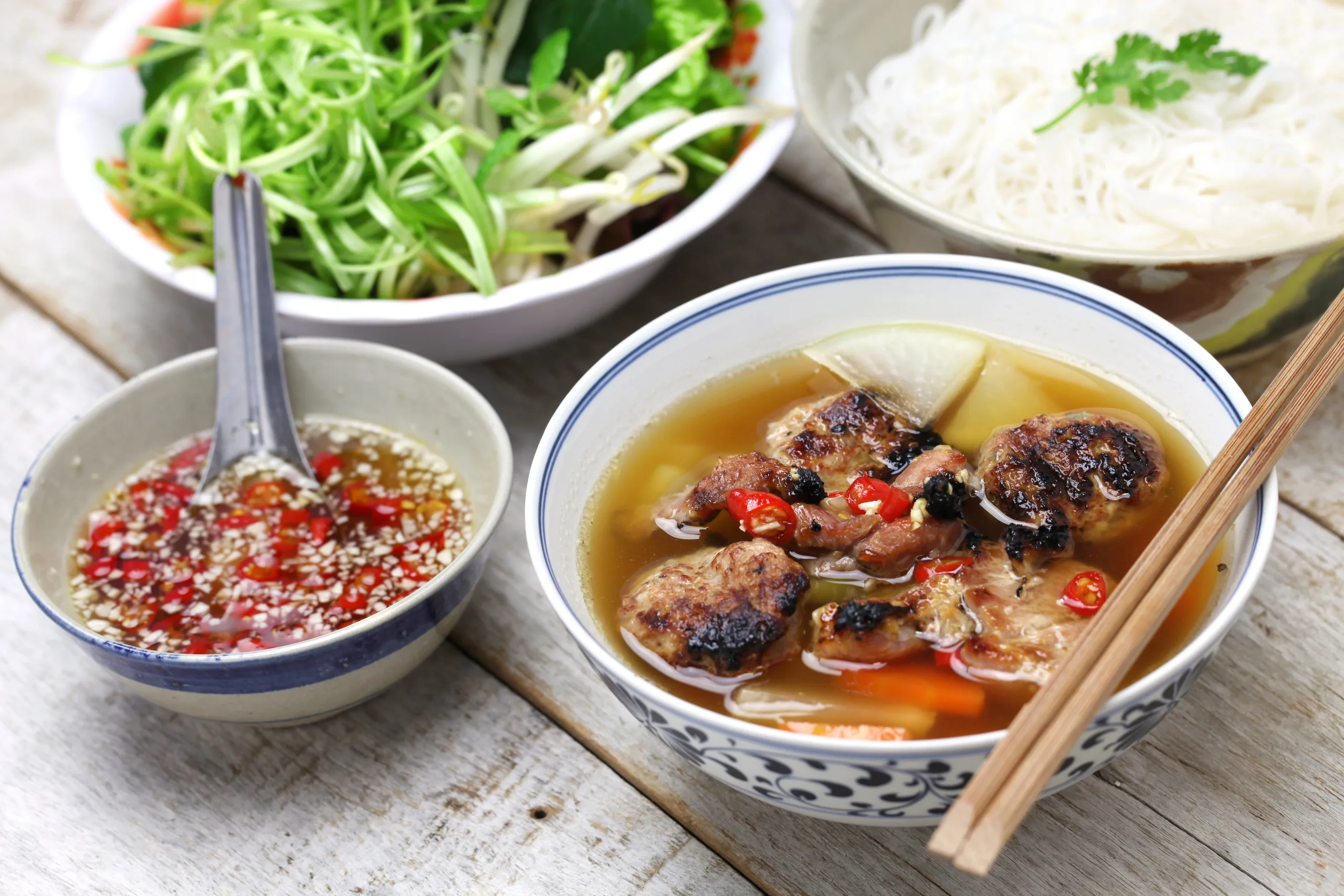
The phin is a small stainless steel filter. It weighs almost nothing. It has four parts—a reservoir, a chamber with a flat metal disc perforated with tiny holes, a small metal cup, and a cap. You place it on top of a cup, add coarse-ground dark roast coffee, pour hot water, and wait. The coffee drips through the perforations, slowly, into the cup below.
The slowness is essential. A phin brew takes five to ten minutes. You cannot rush it. You watch the water darken as it falls through the grounds. You listen to the irregular drip—fast at first, then slowing, then finally stopping. By the time it is done, the coffee has cooled slightly, and you can drink it almost at once. Or you can wait. The phin is designed for patience.
No one knows exactly when the phin was invented. It emerged in Vietnam sometime in the early 20th century, adapted from French coffee equipment that French colonists brought with them. The Vietnamese modified it, simplified it, made it small and portable. It became the tool of coffee culture—not the implement of fancy cafés, but of street corners, of plastic stools, of morning routines.
Cà Phê Sữa Đá: Condensed Milk and Necessity
If the phin is the tool of Vietnamese coffee, then cà phê sữa đá—iced coffee with condensed milk—is its identity. The coffee is brewed hot through the phin. Condensed milk is already in the cup, thick and sweet. When the hot coffee falls into it, the milk swirls through, creating a silken, rich drink. Pour it over ice, and it becomes the beverage of the Vietnamese street.
The story of condensed milk in Vietnamese coffee is a story of constraint becoming tradition. When the French arrived, fresh milk was scarce in the tropical heat. It spoiled quickly. But canned, shelf-stable sweetened condensed milk could survive the journey and the climate. So Vietnamese people adapted. They used what was available. And what was necessary became, over time, beloved. Now condensed milk is not a substitute—it is the authentic choice, the way the drink is supposed to taste.
Cà phê sữa đá is also a drink of equality. The same phin, the same condensed milk, the same ice—whether you are drinking at a plastic stool on a Hà Nội sidewalk or in an air-conditioned café in Hồ Chí Minh City, the formula is the same. The coffee itself may vary—darker or lighter roasted, coarser or finer grounds—but the structure is consistent. It is democratic in its simplicity.
Cà Phê Trứng: The Hà Nội Invention
Not all Vietnamese coffee is the same. In Hà Nội, there is cà phê trứng—egg coffee. It was created in Hà Nội in the 1940s, when fresh milk was scarce, by a café owner who had trained as a bartender at the grand Metropole hotel. He whisked egg yolks with condensed milk and sugar into a cream, heated it gently so the eggs never cooked, and floated it on a cup of hot, strong robusta. The yolk emulsifies with the coffee, smoothing the bitterness of the robusta into something that tastes like sweetness and strength at once.
Cà phê trứng is still served in Hà Nội with a little ceremony. The cup sits in a bowl of hot water to hold its heat. You stir the egg cream into the coffee, watching it swirl and blend. It is richer than cà phê sữa đá, more indulgent, less everyday. It belongs to one city, one café culture, one history. You can find versions elsewhere now, but Hà Nội is where it means the most.
Cà Phê Muối: The Huế Variation
South of Hà Nội, in Huế, there is another variation—cà phê muối, salt coffee. A pinch of salt is added to the hot broth, counteracting the bitterness of the robusta, adding a mineral note that some drinkers prize. It is less common than egg coffee or iced coffee, more of a local curiosity, but it reflects the same principle: Vietnamese coffee is not fixed. It is modified, adjusted, localized. Each city, each café, makes small changes.
The Street-Side Ritual
The real Vietnamese coffee culture is not in specialty roasteries, though those exist now. It is on the street, on plastic stools, often in the early morning or late afternoon. You sit at a knee-high stool at a knee-high table. Around you, other people sit on similar stools, sipping from glasses, not speaking much. It is a social space that is not entirely social—people are together but separate, each absorbed in their drink, in the texture of a small moment before the day's work or after it.
This is where coffee is a ritual, not a product. You do not order a "medium caramel latte." You order "cà phê sữa đá"—Vietnamese iced coffee—and it comes in the way it comes. You pay little money. You sit for as long as you want. No one hurries you away. The coffee is strong. The milk is sweet. The ice cracks as the coffee cools. And for those few minutes or hours, you are part of a practice that millions of Vietnamese people perform each day.
The Specialty Scene
In recent years, a third-wave specialty coffee culture has emerged in Vietnam's cities. Young baristas learn the techniques of precision—temperature control, grind size, water chemistry. They import light-roasted arabica from other countries. They open shops with marble counters and filtered water. They use V60 filters and scales. This is not Vietnamese coffee in the traditional sense, but it exists alongside it, and some drinkers move between both worlds.
The specialty scene does not negate the street café. Both can coexist. A person can drink a precision-brewed single-origin pour-over at a modern café in Hà Nội, then sit on a plastic stool five minutes away, sipping cà phê sữa đá from a glass, watching the city pass. Both are valid. Both are Vietnam.
What to Drink and Where
If you are in Hà Nội, try cà phê trứng at an established place, ideally in the Old Quarter where the tradition began. Sit for a while. Let it cool slightly before stirring it in. Note the richness that the egg yolk creates.
If you are in the Central Highlands around Buôn Ma Thuột, you are at the source. Coffee farms offer tours. Some roast and sell their own beans. The coffee is fresher here, closer to the origin. The water is often better. The coffee tastes different than it does in the city.
If you are anywhere else—Hà Nội, Hồ Chí Minh City, coastal towns—find a street-side café, order cà phê sữa đá, and sit. Bring a book or a phone, or bring neither. Watch people. Listen to the coffee drip through the phin. This is the practice that matters, not the precision of the brew.
The Scale and the Culture
Vietnam's coffee industry is enormous—tens of millions of bags exported every year, the majority robusta. But the culture of coffee in Vietnam is not primarily about export. It is about the morning, the afternoon, the moment of pause, the small ritual of a cup of coffee on a stool by the street. The industry feeds the world. The culture feeds the person drinking.
If you want to explore Vietnamese coffee beyond a tourist café—to understand the plantations, the roasting, the street culture, the differences between robusta and specialty arabica, the history of how condensed milk became tradition—tell Trip2VN what draws you. A specialist can design an itinerary that moves from the farms of the highlands to the cafés of Hà Nội, showing you both the scale and the intimacy of Vietnamese coffee.
The next step
Bring this into your trip
Tell us what caught you here — a specialist builds the days around it and replies with a clear price.
Plan this trip A trip that goes thereCủ Chi Tunnels & Mekong Delta Exploration from Ho Chi Minh City1 day · From $35