
The North
Common Mistakes to Avoid When Visiting Cao Bằng and Bản Giốc Falls
Avoid rushed itineraries, bad timing at the waterfall, and transport missteps on your trip to Cao Bằng and Bản Giốc Falls.
By Trip2VN Editorial · 4 min read · Published Sep 7, 2026
How many days do you need for Cao Bằng and Bản Giốc Falls?
A trip to Cao Bằng requires at least three full days and two nights from Hà Nội. The biggest mistake travelers make is attempting a two-day weekend sprint or even a single-day journey. The drive from Hà Nội to Cao Bằng City takes roughly six to seven hours over 280 kilometers. From the city, reaching Bản Giốc Falls in Trùng Khánh District adds another two hours along winding provincial roads. A two-day schedule leaves you sitting in vehicles for over fifteen hours, with almost no time to explore the landscapes or villages along the way. Planning three days gives you one full day for Bản Giốc Falls and Ngườm Ngao Cave, plus time to visit Pác Bó Historical Site or the blacksmith community at Phúc Sen village without exhaustion.
What is the best time of day and season to see Bản Giốc Falls?
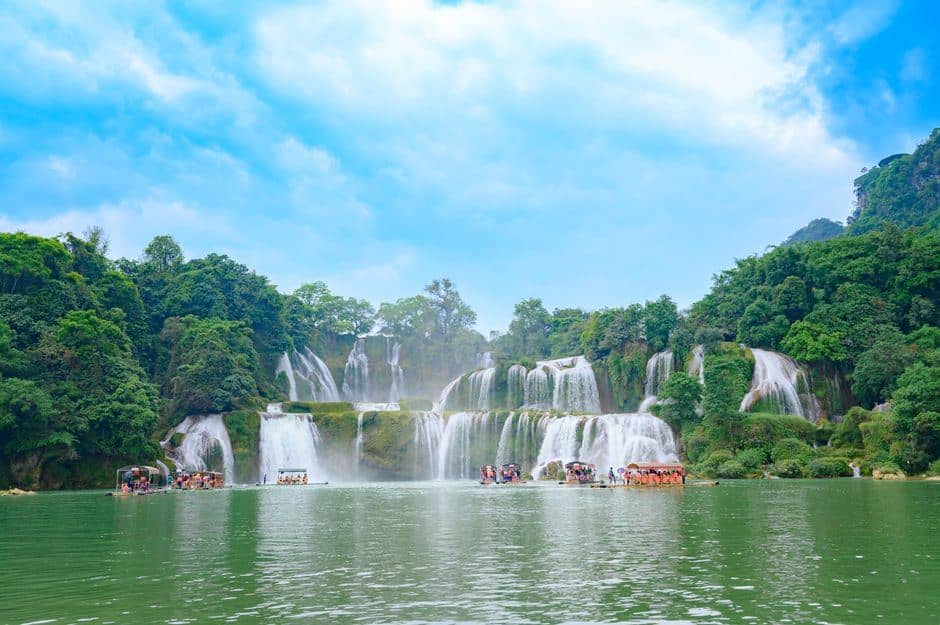
The best time of day to view Bản Giốc Falls is between 11:00 AM and 2:30 PM. Upstream hydroelectric dams often release water during midday hours, creating the fullest cascades. Arriving early in the morning can result in a thinner water flow and heavy fog that obscures the view across the Quây Sơn River. Seasonally, September to October offers the best conditions. This window coincides with clear weather and the golden harvest season in the surrounding valleys. The heavy rainy season between June and August brings high water volume, but the water often turns muddy brown. The dry season from December to April features clear green water, though the total flow is substantially reduced.
Should you stay in Cao Bằng City or near Bản Giốc Falls?
Staying only in Cao Bằng City is a logistical error that adds unnecessary daily transit. The distance between the city center and the waterfall is approximately 90 kilometers each way. Driving back and forth wastes three to four hours on the road. A better approach is spending your first night in Cao Bằng City, then relocating to a local homestay in Trùng Khánh or the stone village of Khuổi Ky near the falls for your second night. Staying in Khuổi Ky places you five minutes from Ngườm Ngao Cave and ten minutes from Bản Giốc. This allows you to visit before day-trip crowds arrive and provides an authentic look at local Tày ethnic architecture.
What border rules and payment issues should travelers prepare for?
Bản Giốc sits directly on the international border with China, requiring visitors to keep original identification documents with them. Foreign passport holders and Vietnamese citizens must present valid identification at checkpoints if requested by border authorities. Another frequent issue is assuming card payments work throughout the province. Beyond hotels in Cao Bằng City, small restaurants, fuel stops, and homestays operate almost entirely on cash or local bank transfers. Carry sufficient Vietnamese Đồng before heading into remote districts. Fuel stations become sparse along National Highway 3 and Provincial Road 206, so fill your motorcycle or car tank whenever you leave a major town.
The next step
Bring this into your trip
Tell us what caught you here — a specialist builds the days around it and replies with a clear price.
Plan this trip A trip that goes thereHà Giang Loop4 days · From ~$230