
Đà Lạt, Lâm Đồng
Pine Fog, Slow Coffee, Cool Air
At 1,500 metres elevation, Đà Lạt is Vietnam's only temperate escape — cold mornings, French architecture, and coffee drinkers who have nowhere else to be.
By Trip2VN Editorial · 9 min read · Published Jul 14, 2026
The Pace of Coffee
Đà Lạt is a city built for people seeking escape. French colonists came here in the 1890s to flee the lowland heat and build a hill station in their own image: villas with slate roofs, gardens full of temperate flowers, and air cool enough that sitting outside without sweating felt possible. More than a century later, the city has become a refuge of a different kind—for the country's youth on holiday, for couples seeking privacy, for anyone exhausted by the pace of the coastal cities below.
The key to understanding Đà Lạt is its climate. The city sits at around 1,500 metres elevation, high enough that the air stays spring-cool all year. From October through March, the mornings are genuinely cold—sometimes dropping below 10°C. Fog rolls through the pine forest surrounding the city, and the light becomes soft and muted, almost dreamlike. It is the only place in Vietnam where you might need a sweater at midday.
This climate shapes everything about how the city is lived: the pace, the rituals, the way time seems to move differently here. And perhaps nowhere is this more visible than in how Đà Lạt drinks coffee.
In Sài Gòn or Hà Nội, coffee is often drunk quickly—through a phin, gone in three minutes, a jolt of energy before moving to the next thing. In Đà Lạt, coffee is not a transaction. It is an event that unfolds over thirty or forty minutes.
The ritual begins the moment you sit. The phin arrives, and so does the coffee—strong Vietnamese robusta, usually sourced locally from the highlands. The phin is set over a glass, and the water begins its slow drip. This is when the waiter disappears. There is no hurrying. The coffee will be ready when it is ready.
While you wait, the city reveals itself slowly. The fog shifts. Shadows lengthen across the street. A shopkeeper locks their door. Someone rides past on a motorbike, jacket zipped against the cold. You notice these things because there is time to notice them. Your eyes move. Your mind moves. The coffee is still dripping.
This is when conversations happen—the real kind, the ones that require time. Couples sit across from each other and actually talk rather than consult their phones. Friends who have not seen each other in months settle in for what might become a three-hour coffee. Elderly men play chess at a corner table, their moves slow and considered. An old woman reads the newspaper, her coffee cooling beside her, and she does not seem to mind.
When the phin finally finishes and you lift the glass to drink, fifteen minutes have passed. The coffee has cooled to a temperature that can be sipped rather than gulped. The first sip is complex: strong, slightly earthy, with a bittersweet finish. The condensed milk—already mixed into the glass—has begun to separate slightly from the heat, creating sweetness at the bottom and a cleaner taste at the top. You drink it slowly, moving between the two levels, and it lasts another twenty minutes.
The Architecture
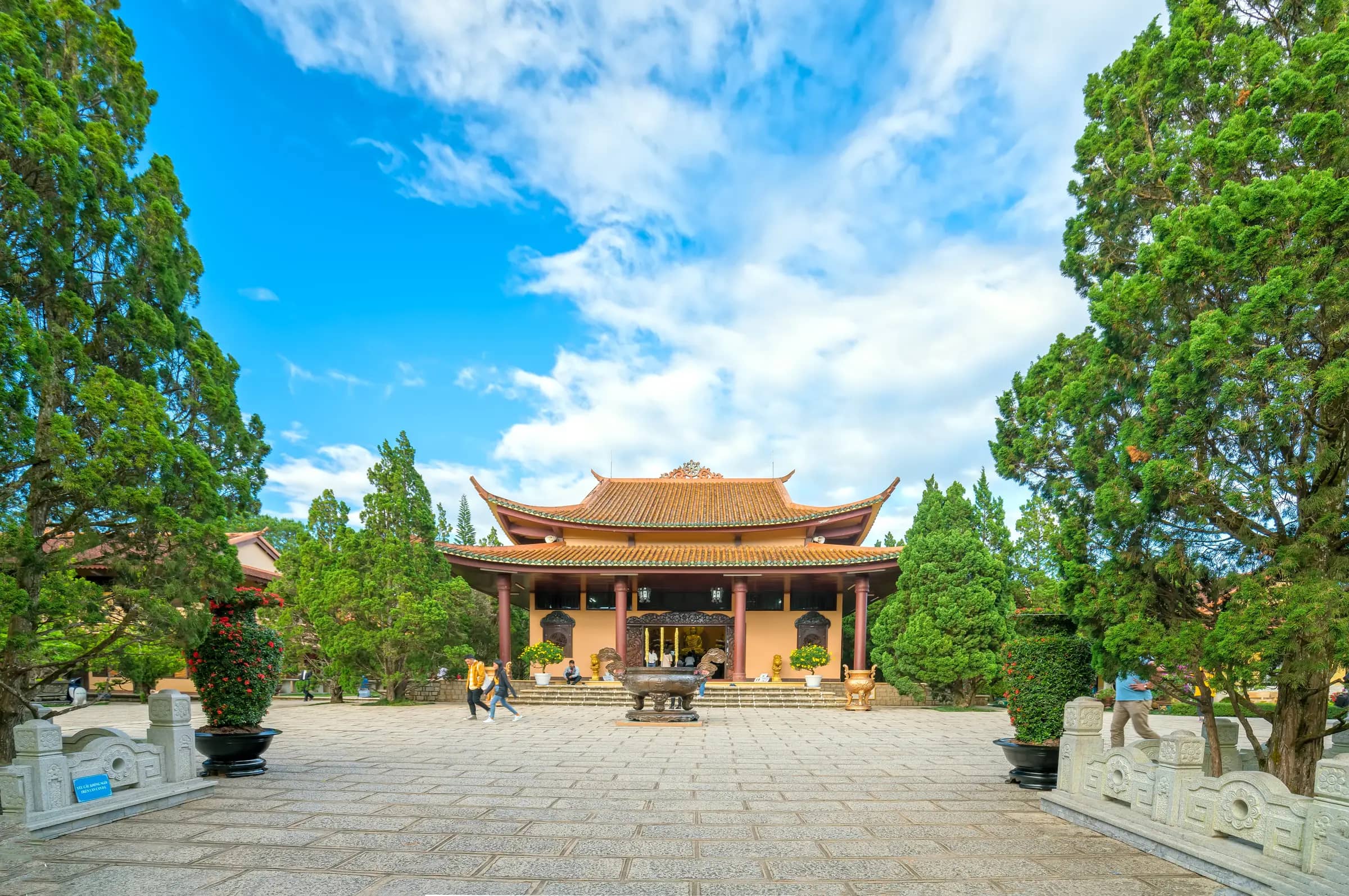
The architecture that holds Đà Lạt's coffee culture is impossible to separate from the experience itself. The city was planned in the 1890s as a French hill station, and the colonial bones are still visible: pine-lined avenues, quiet residential streets whose names were once French, and villas that range from elegant to dilapidated but all share a faded grandeur.
Some of the old villas have been converted into cafés, their colonial sitting rooms and fireplaces becoming gathering spaces. Many preserve original features—worn wooden floors, old fireplaces, period furniture. These spaces offer the texture of time. Sitting in one with a coffee feels like sitting in a memory of a place you have never been.
Most café culture in Đà Lạt, though, happens not in restored villas but in smaller, less decorated spaces—plastic chairs on the sidewalk, simple wooden tables, a view of the street. Here, the pace is the same. The coffee still takes forty minutes. The ritual is unchanged. The setting is simply honest rather than romantic.
The Flowers and the Slowness
What makes Đà Lạt different, beyond climate and architecture, is that the city has remained, in many ways, outside the trajectory of modern Vietnam. The pace of development that has swept through the lowland cities—the motorbikes, the noise, the constant sense of rush—has touched Đà Lạt more lightly. There are modern hotels and restaurants now, shopping centres, tourists. But the baseline rhythm of the city remains one of slowness.
The hills around Đà Lạt grow flowers for export—roses, sunflowers, carnations, orchids—and the flower gardens have become a major tourist draw. But they have also preserved something of the original French garden tradition: paths lined with temperate flowers, spaces designed for slow walking and contemplation rather than rapid sightseeing.
The city's lake—Xuân Hương Lake—is ringed by a walking path, and on weekend mornings, locals complete circuits of it, taking an hour to walk what might take twenty minutes elsewhere. They stop. They sit. They watch the water. Some bring a coffee from a café, carrying it carefully in both hands as they walk.
This is the culture of the city: time is not something to be saved but something to be spent.
Getting There
Đà Lạt is accessible by road from Sài Gòn (approximately four hours through the mountains) or by scenic bus journey from the coast. The best months are October through March, when the air is cool and the sky often clear — though rain and fog are never far away here.
The city itself is best explored on foot. The streets curve with the hills, but the lake at the centre keeps you oriented, and the old cafés and colonial landmarks sit within easy reach of Xuân Hương Lake and the central market.
There is no need to rush. There is time. The fog is not going anywhere. The coffee will still be dripping when you arrive.
If a few cool, slow highland days belong in your Vietnam, tell us — a specialist will fold Đà Lạt into the route and come back with a clear quote.
The next step
Bring this into your trip
Tell us what caught you here — a specialist builds the days around it and replies with a clear price.
Plan this trip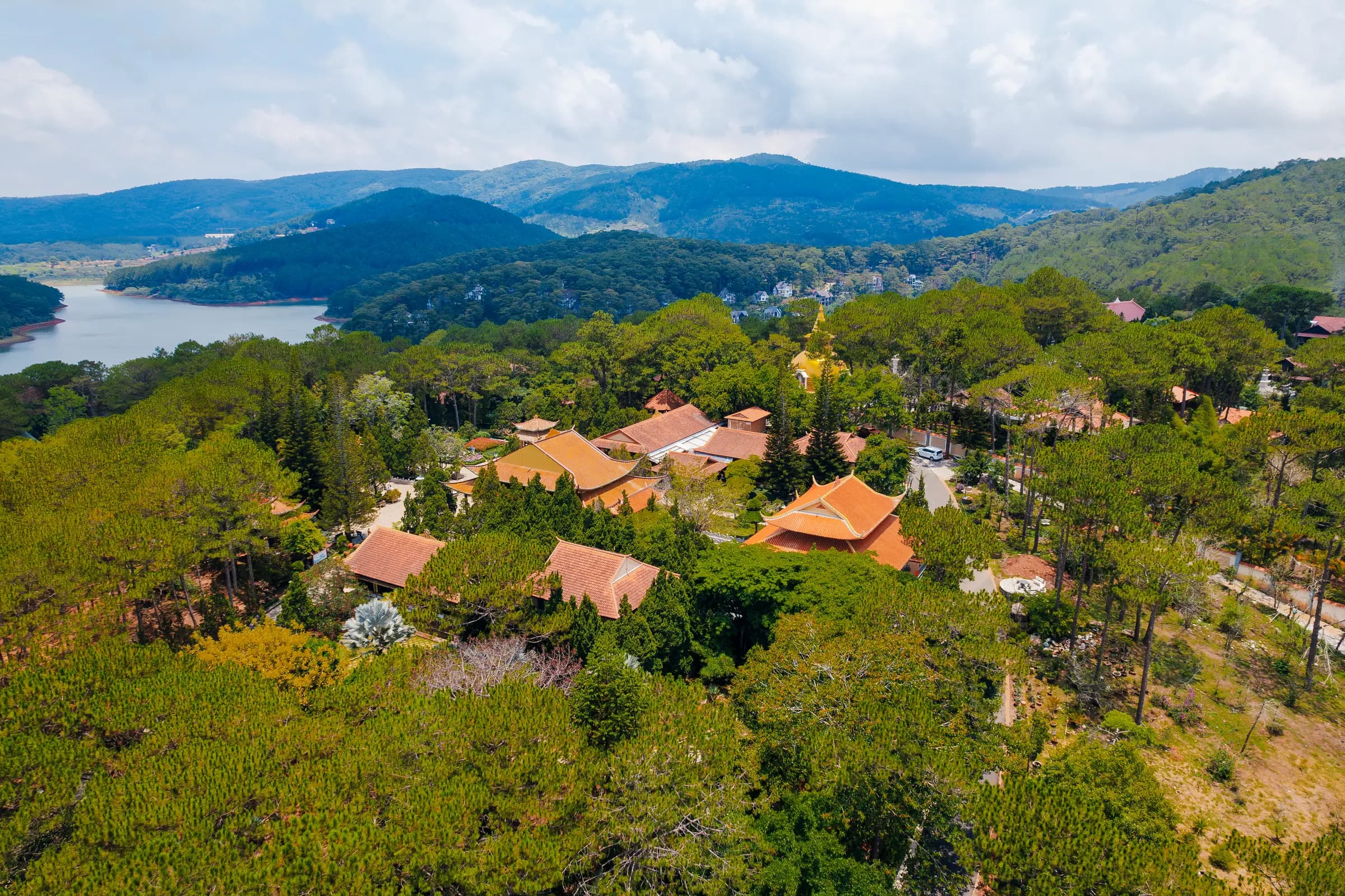 A trip that goes thereĐà Lạt Highlands3 days · From ~$120