Bản Giốc Falls
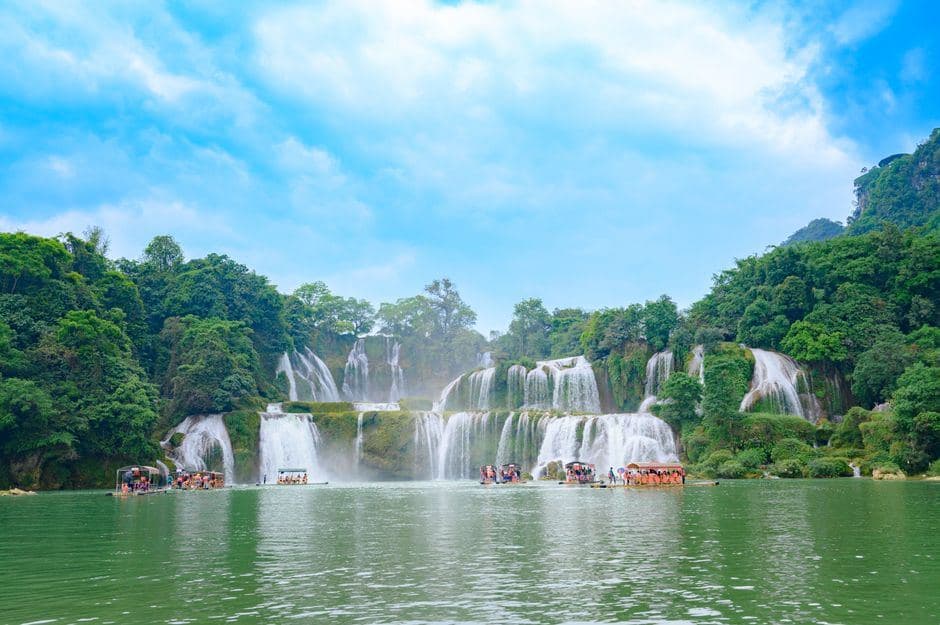
A tiered waterfall plummeting over limestone terraces with a view across to the Chinese border — one of Việt Nam's most dramatic cascades.


 🖼 5 photos
Tiered waterfalls, karst valleys and the quiet, green northeast frontier.
Cao Bằng is the green northeast frontier — Bản Giốc waterfall tumbles over stepped limestone in a spray visible from the next valley, Thang Hen lakes mirror the karst sky, and the province's inland plateaus unfold with quiet rice hamlets and ethnic minority markets. The border with China runs close; the landscape feels both intimate and vast.
Few tourists venture deep into Cao Bằng — those who do find caves carved by limestone rivers, villages where Tày and Dao minorities farm the slopes, and a rhythm of life tied to the seasons. The journey here is as rewarding as the sights themselves.
A tiered waterfall plummeting over limestone terraces with a view across to the Chinese border — one of Việt Nam's most dramatic cascades.
A chain of emerald lakes set in karst valleys — still waters reflecting limestone peaks, a quiet sanctuary for wildlife.
A remote mountain valley with karst formations, mountain streams and ethnic minority villages — a day trek through pristine landscape.
Limestone grottoes carved by underground rivers — some explored, some barely touched, with stalactite and stalagmite formations.
Weekly markets in mountain towns — local crafts, textiles and a glimpse of upland trading tradition.
A high limestone plateau with rare species and grassland views — less visited than the valleys below.
Corn on the cob (roasted)
Fresh corn roasted over charcoal — a roadside staple in the mountain regions of Cao Bằng.
Tào phủ (tofu stir-fried)
Pressed tofu from local makers, fried with garlic and fish sauce — simple, nourishing village food.
Forest mushrooms (stew)
Wild mushrooms foraged from the slopes, stewed with greens and garlic — earthy, seasonal.
15 stories·Latest story: Sep 11, 2026
 The NorthWhere to Photograph Cao Bằng and Bản Giốc Falls: Locations, Timing, and LightThe NorthBản Giốc Falls in the Rain: What to Do in Cao BằngThe NorthCommon Mistakes to Avoid When Visiting Cao Bằng and Bản Giốc FallsThe NorthOne Day in Cao Bằng & Bản Giốc Falls: A Route That Works
5 properties in the directory
The practical questions we hear most about Cao Bằng, answered briefly.
~250km, about 5–6 hours by road to Cao Bằng city, then another ~1h to the falls. A long day drive but doable.
Overnight is far better — the drive is long, and you'll want time for Thang Hen or a valley walk. Two nights ideal.
September to November: dry and cool. July–August can be humid with heavy rain; March–May is spring growth with flowers.
For Phong Nậm and deep valley walks, yes — local guides can show hidden caves and minority villages off the main path.
Getting there
Cao Bằng city is reached by road from Hà Nội (~5–6h) or from Hạ Long (~4h). No commercial flights; buses are the main option.
Getting around
Your own vehicle or a hired car is essential — sights are spread out and public transport is limited. Local drivers know the best valley routes.
Day 1 — arrival & Bản Giốc
Drive to Cao Bằng city, settle in, then head to Bản Giốc waterfall for the afternoon light on the cascade.
Day 2 — Thang Hen & valleys
Visit Thang Hen lakes and hike through karst valleys; visit an ethnic market if timing aligns.
Day 3 — Phong Nậm or return
A full-day trek into Phong Nậm valley with a local guide, or head back toward Hà Nội.
Cao Bằng city
The provincial capital — modest hotels and restaurants, the base for exploring the province.
Bản Giốc and surrounds
The waterfall and nearby karst — homestays and local lodges in the mountain villages.
Thang Hen lakes
A chain of emerald waters set in limestone valleys — quiet, remote and pristine.
Phong Nậm valley
A deep mountain valley reached by trek — home to ethnic minorities, cave systems and raw landscape.
Plan your trip
Tell us who is coming and what you want to see. A specialist replies with a route and a clear price — usually within a few hours.
Plan this trip